RESTORATIVE DENTISTRY
Dental Crowns & Bridges
Durable, Natural-Looking Restorations That Rebuild Your Smile
When teeth are weakened, broken, or missing, everyday activities like eating and smiling can become difficult. At Glendale Dental Wellness, Dr. Ivan Chan restores function and confidence with custom-made crowns and bridges. Designed to blend seamlessly with your natural teeth, these restorations protect your oral health while enhancing your smile's appearance.
Whether you need a single crown to strengthen a damaged tooth or a bridge to replace missing teeth, Dr. Chan uses advanced dental technology and premium materials to deliver results that look, feel, and function like your natural teeth.
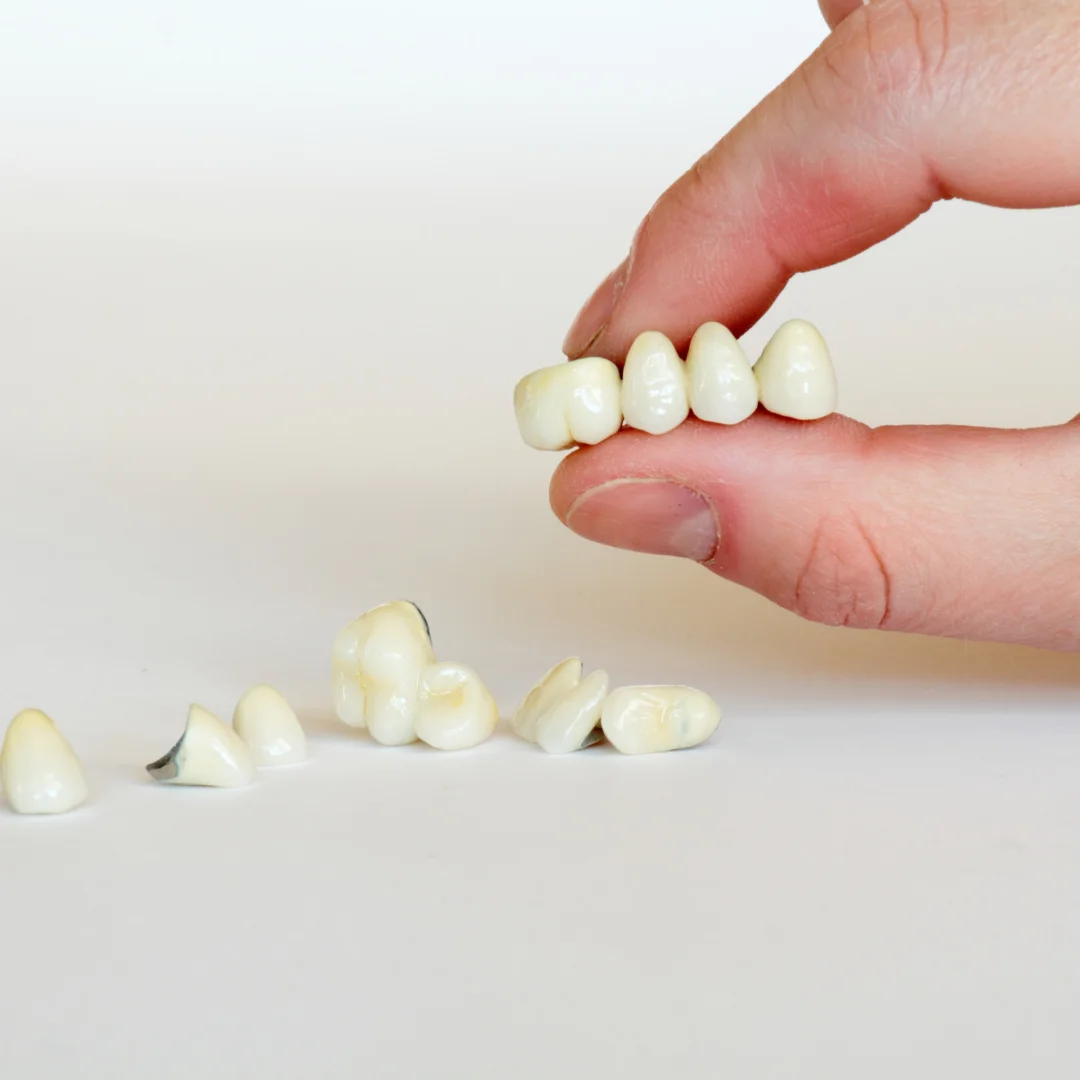
When You May Need a Crown or Bridge
Dr. Chan may recommend a crown when a tooth is too damaged for a filling but can still be saved, or a bridge when one or more teeth are missing and you want a fixed, permanent solution. Common situations include:
- Cracked, broken, or worn teeth: a crown restores strength and prevents further damage
- Large fillings that weaken the tooth: a crown provides full-coverage protection
- After root canal therapy: a crown seals and reinforces the treated tooth
- Missing teeth: a bridge fills the gap without removable dentures
- Dental implant restoration: a crown tops the implant for a natural result
- Cosmetic improvements: crowns reshape severely discolored or misshapen teeth
Types of Crowns and Bridges
Dr. Chan offers several materials and designs, each chosen to match your tooth's location, function, and aesthetic needs:
Porcelain Crowns
The most natural-looking option, ideal for front teeth. Porcelain matches tooth color precisely and resists staining. Best when aesthetics are the top priority.
Porcelain-Fused-to-Metal (PFM)
Combines the strength of a metal core with the appearance of porcelain. A versatile choice for both front and back teeth that balances durability with natural aesthetics.
Zirconia Crowns
Extremely durable and biocompatible, zirconia withstands heavy chewing forces while maintaining a natural appearance. Increasingly popular for both front and back teeth.
Traditional Bridge
The most common type, one or more replacement teeth (pontics) anchored by crowns on the teeth on either side of the gap. A reliable, time-tested restorative solution.
Cantilever Bridge
Anchored on only one side, used when teeth exist on just one side of the gap. Ideal for areas with less biting force, such as front teeth.
Implant-Supported Bridge
Supported by dental implants rather than natural teeth, the strongest, most stable option. Preserves bone and doesn't require altering adjacent healthy teeth.
Caring for Your Crowns and Bridges
With proper maintenance, quality restorations can last 10-15 years or longer. Follow these guidelines to protect your investment:
Clean around your restoration twice a day. Use floss threaders or interdental brushes to clean under bridges where a regular brush can't reach.
Don't bite down on ice, hard candy, or nuts. Sticky foods like caramel can pull on restorations and loosen the bond.
Teeth grinding puts excessive force on crowns and bridges. A custom nightguard protects your restorations while you sleep.
See Dr. Chan every six months for professional cleanings and check-ups. Early detection of wear or loosening prevents bigger problems.
Watch for sensitivity around the restoration, visible cracks, a loose feeling when chewing, or dark lines at the gum margin. Contact Dr. Chan promptly if you notice any changes.
Material quality, precision of fit, your oral hygiene routine, bite habits, and diet all play a role. A well-crafted restoration with consistent care delivers the longest lifespan.
Frequently Asked Questions
How long do crowns last?
With proper care, crowns typically last 10-15 years or longer. Lifespan depends on the material, how well you care for the restoration, and your bite habits. Grinding or clenching can shorten crown life. Dr. Chan will help you understand what to expect for your specific crown.
Will a crown feel different?
Initially, a crown may feel slightly different or thick because it's new and your mouth needs to adjust. However, within a few days to a week, most patients adapt and the crown feels completely natural. If it continues to feel uncomfortable after a week, contact Dr. Chan for adjustments.
Can a crown be whitened?
No, crowns don't whiten like natural teeth. If you want your crown to match a whitened smile, you should whiten your natural teeth first, then have the crown made to match the whitened shade. This ensures a perfect color match.
What happens if my crown breaks or becomes loose?
Contact Dr. Chan immediately. A loose crown can allow bacteria to get under the crown and damage the tooth. A broken crown needs to be replaced. Don't wait to address crown problems, as they can worsen quickly.
Is a bridge a permanent solution?
Yes, a properly made bridge is a permanent restoration that is cemented in place. Unlike dentures, you cannot remove a bridge yourself. It stays in place and functions like a natural tooth. However, bridges do eventually wear out and may need replacement after 10-15 years.
Can I eat normally with a crown or bridge?
Yes, with proper care, you can eat most foods. However, avoid very hard foods like nuts, hard candy, or ice that could damage the restoration. Also avoid extremely sticky foods that could pull on the restoration. Within these guidelines, you should be able to eat normally.